8 Best Boutique Hotels in Philadelphia for a History Weekend
Discover the best boutique hotels for history lovers, weekend wanderers, and first-time visitors across Philadelphia's most storied neighborhoods.
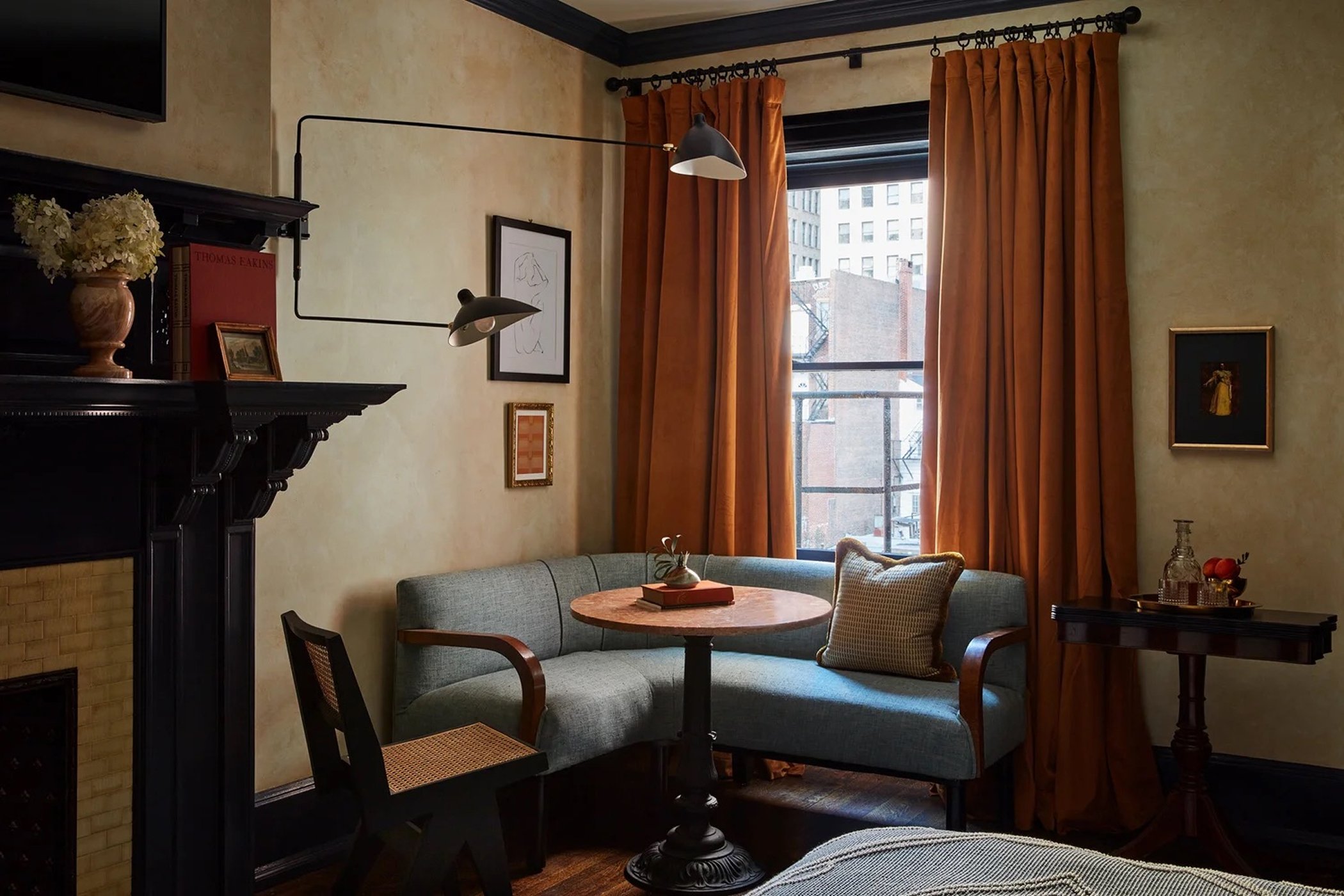
Guild House Hotel | Source: Rohe Creative | Photo by Jason Varney
All products and listings featured on Outpost Journal are independently selected by our editors. However, we may receive compensation from retailers and/or from purchases of products through these links.
No city in the country wears its founding quite like Philadelphia does. The Continental Congress met here, the Declaration of Independence was signed here, and the streets of Old City still follow the same grid William Penn laid out in 1682. But the Philadelphia worth visiting right now is not just a civics lesson. It is a city of neighborhoods in full creative conversation with their own pasts, where a 19th-century whiskey distillery can become one of the most talked-about restaurants in the country, and an 18th-century women’s refuge can resurface as a genuinely great hotel.
The boutique hotels that have opened here over the past decade or so tend to understand that instinct. The best ones take the fabric of a building and treat it as a starting point rather than a background detail. A few nod to Philadelphia’s more recent cultural history: Fishtown’s industrial renaissance, the suffragist women of Center City, the university culture of West Philadelphia. What follows is a shortlist of eight properties that give that history room to breathe, while still delivering the kind of stay worth crossing a few state lines for.
1. Anna & Bel
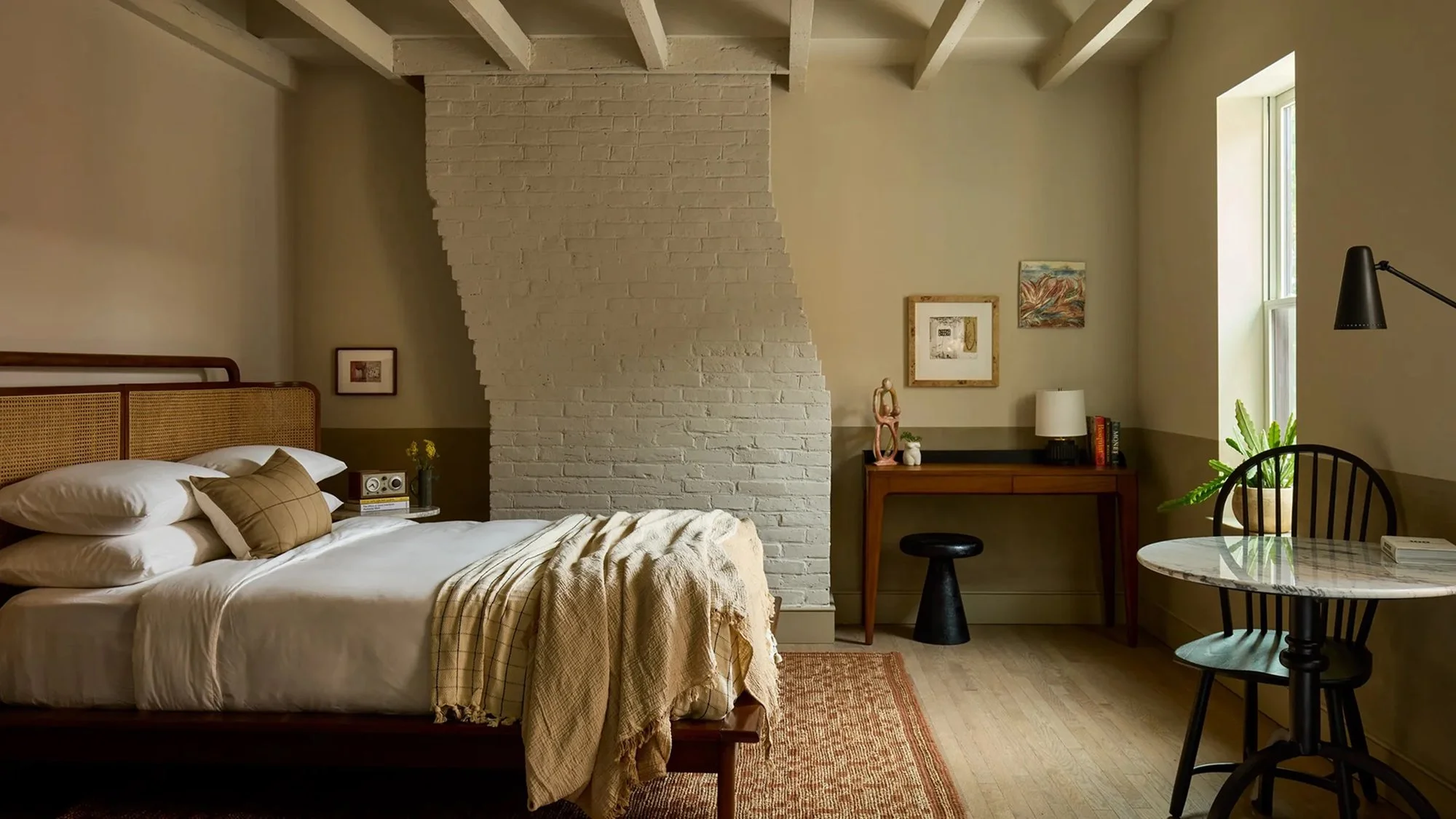
Anna & Bel | Source: Anna & Bel | Photo by Stuart Goldenberg
Fishtown, Philadelphia
The building on Susquehanna Avenue in Fishtown has lived many lives. Constructed as a private mansion in the 18th century, it became in 1858 the Penn Asylum for Indigent Widows and Single Women, a women-run institution that operated for generations before spending its final decades as a retirement home. In 2024, it reopened as Anna & Bel, with 50 rooms and suites decorated in warm neutrals and a mix of vintage and contemporary furniture, all arranged around a heated courtyard pool framed by French Quarter-style two-story porches.
Chef Tyler Akin’s restaurant Bastia anchors the ground floor as a sun-filled daytime café that transforms at night into a Mediterranean kitchen with a seasonal menu drawing from the coastal cuisines of Corsica and Sardinia. The cocktail lounge Caletta, tucked beside the courtyard, is exactly the kind of low-lit bar where you stay longer than intended. The two-bedroom penthouse, redesigned in collaboration with Anthropologie as the brand’s first-ever hotel suite, is shoppable from the coffee table books down to the throw pillows, and feels more like a beautifully appointed apartment than a suite.
2. Guild House Hotel
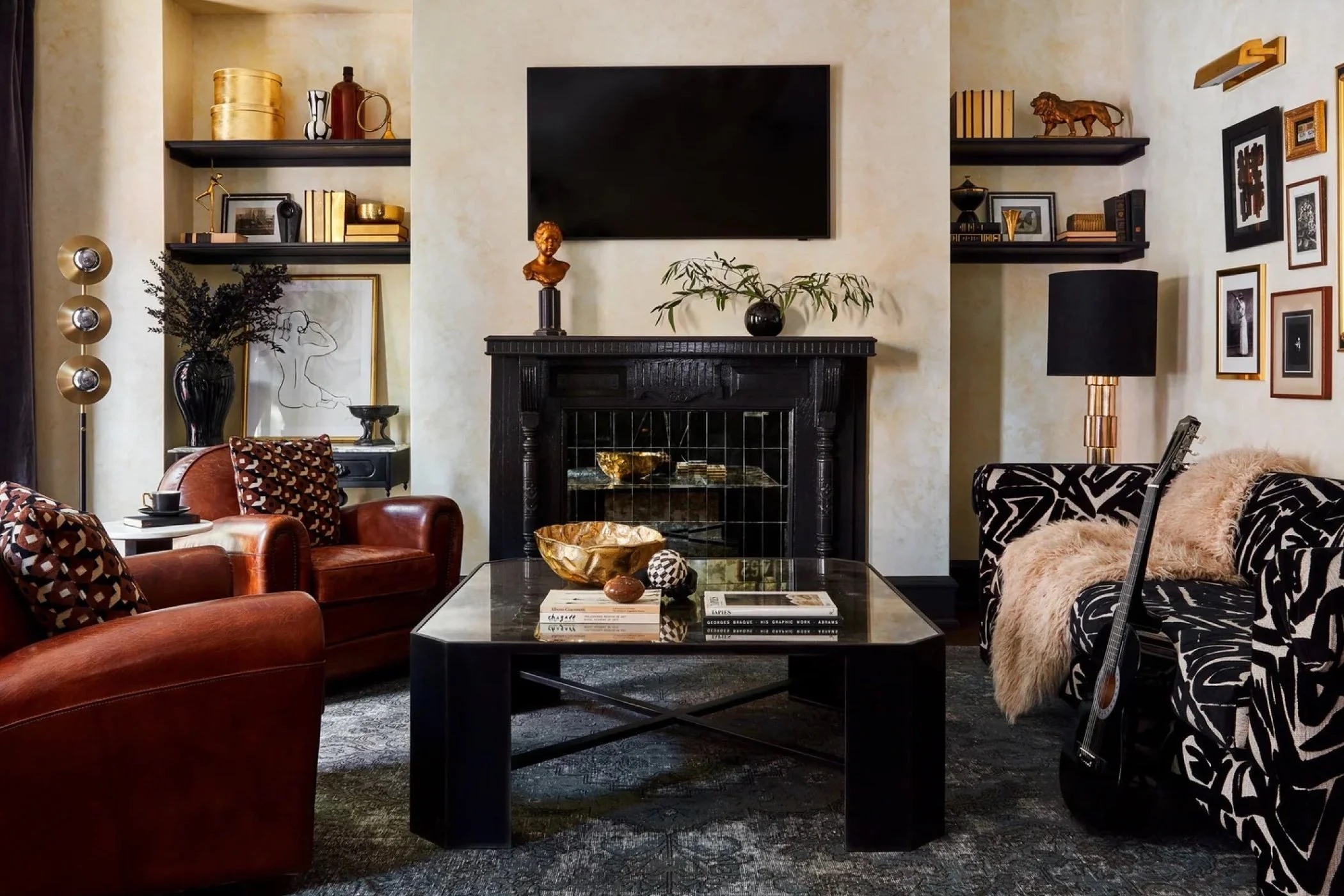
Guild House Hotel | Source: Rohe Creative | Photo by Jason Varney
Washington Square West, Philadelphia
In 1882, a group of Philadelphia women founded the New Century Guild to support the growing number of women entering the workforce, at a time when doing so was still considered deeply controversial. From the outset, the Guild’s members included abolitionists, suffragists, activists, artists, and writers, among them nationally known reformers like Florence Kelley, a pioneering advocate for the rights of women and children in the workforce. The Guild moved through several homes before purchasing its permanent headquarters in 1906: a four-story Italianate rowhouse at 1307 Locust Street, built around 1850, which was designated a National Historic Landmark in 1993.
That building is now the Guild House Hotel, a 12-room boutique property designed almost entirely by women-owned firms and steeped in the organization’s history at every turn. The suites were conceived by Rohe Creative, a Philadelphia-based, woman-owned interior design studio, with each room named for and inspired by a notable Guild member, including the Eliza suite, which honors founder Eliza Sproat Turner. There is no front desk, in keeping with the hotel’s “invisible service” philosophy, and staff are on call 24 hours a day. Room amenities, from coffee to bath products, come from women-owned businesses, a detail the hotel has been deliberate about from the day it opened.
3. Yowie
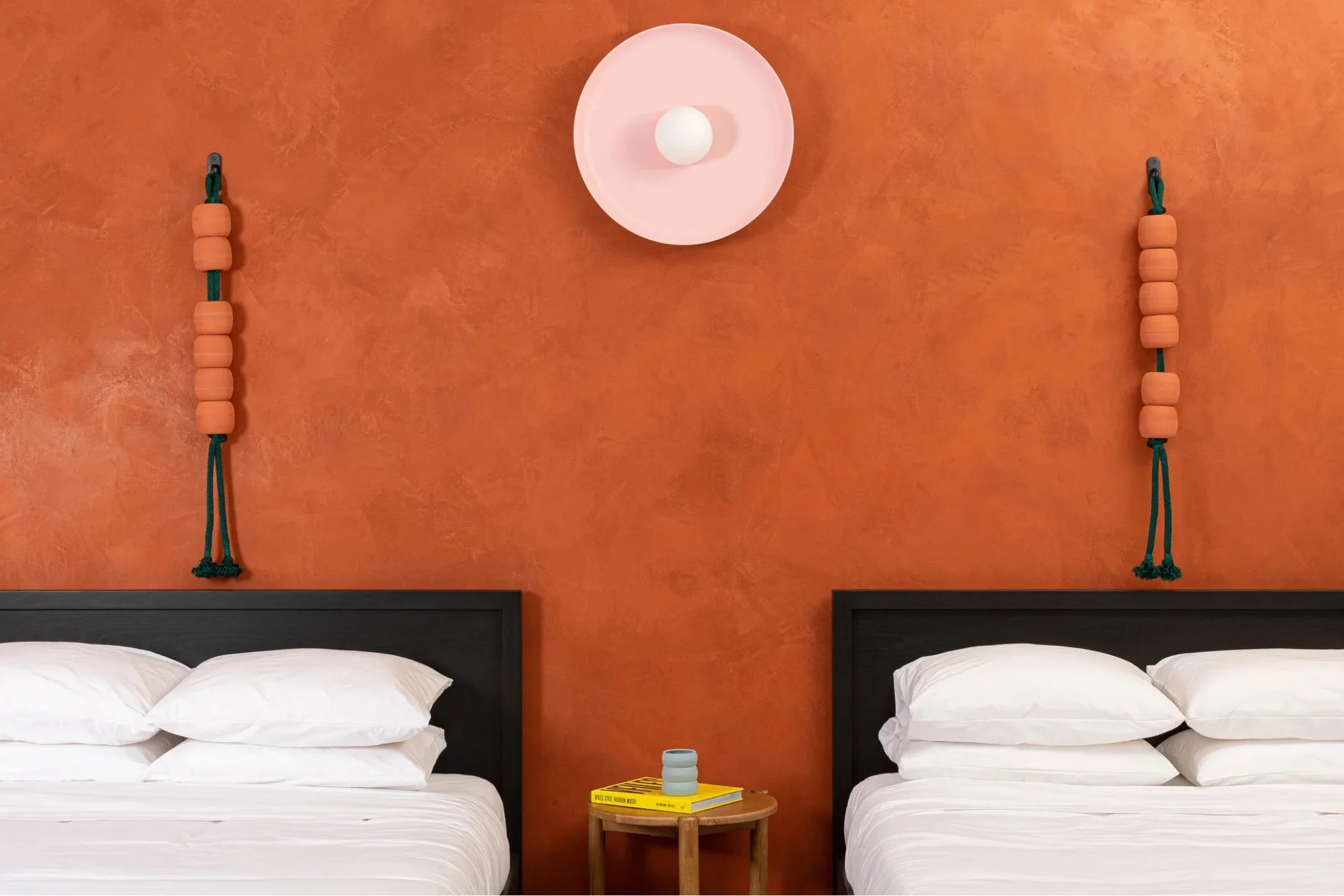
Yowie | Source: Yowie | Photo by Bre Furlong
Queen Village, South Street, Philadelphia
Founder Shannon Maldonado grew up in Philadelphia, left for New York to work in fashion design at Ralph Lauren and Urban Outfitters, and came back in 2016 to open a small gift shop on South Street. By 2019, Bon Appétit had named it the coolest shop in the city. By 2023, it had expanded into a 13-room boutique hotel above two former rowhouses, with the design shop and the all-day Forin Café still running on the ground floor. The rooms, each individually decorated, carry Maldonado’s sensibility: eclectic and colorful without being chaotic, with pieces by emerging artists and established designers that are, like almost everything at Yowie, available to purchase.
Guests check in with a unique access code and no front desk in sight, which suits the overall ethos of the place: personal, low-fuss, and designed to feel like a friend’s very stylish guest room. Independence Hall and the Liberty Bell are a short walk away, giving the hotel an unlikely but genuinely useful position between South Street’s creative energy and Old City’s historic core.
4. Lokal Hotel

Lokal Hotel Old City | Source: Lokal Hotel Old City
Old City, Philadelphia
Lokal pioneered the invisible-service apartment hotel model in Philadelphia, and the Old City location remains one of its most compelling. Six apartment-style suites occupy a registered historic building on North 3rd Street, each named for a Philadelphia icon: there is a Ben for Benjamin Franklin and a Betsy for Betsy Ross, with interiors by the nationally recognized design duo Jersey Ice Cream Company. Hand-painted portraits prop on countertops, beds are stacked with down comforters, and the white oak floors were milled using the same live-sawn technique used a century ago, a choice that reads as instinctive rather than performative in a building of this age.
Full kitchens, washer-dryers, and separate living rooms give the suites a genuine apartment feel rather than a dressed-up hotel room. The location puts Elfreth’s Alley, widely considered the oldest continuously inhabited residential street in the country, essentially at the front door. Worth noting: the building is a four-story walk-up with no elevator, which is a small price for original details left largely intact.
5. The Franklin on Rittenhouse

Source: The Franklin on Rittenhouse
Rittenhouse Square, Philadelphia
The carriage house behind a 1903 Rittenhouse Square mansion is not the kind of place that announces itself. The front door is red, the facade is brick and stone, and the hotel feels more like a well-run European inn than a conventional boutique property. Rooms are named and individually decorated with oil paintings and antique-style furnishings, Frette linens, marble bathrooms stocked with Molton Brown products, and in some cases working fireplaces. Continental breakfast is included each morning.
The Franklin Mortgage & Investment Company, the bar hidden behind an unmarked door off the lobby, has been a neighborhood fixture in its own right. It serves Prohibition-era cocktails in an Art Deco room, and reservations are generally a good idea, whether or not you’re staying at the hotel. Independence Hall is less than two miles away, and Rittenhouse Square is thirty seconds from the front door.
6. Hotel at Wm. Mulherin’s Sons

Hotel at Wm. Mulherin’s Sons | Source: Hotel at Wm. Mulherin’s Sons | Photo by Matthew Williams
Fishtown, Philadelphia
William Mulherin, an Irish immigrant who came to America at age 15, founded his whiskey blending company in Philadelphia in 1887. The company flourished, selling its rye under names like Private Club Pure Rye and Winner Pure Rye, until Prohibition closed it in 1924. The red-brick building at 1355 North Front Street, constructed in 1890, sat largely unchanged for nearly a century before reopening in 2016 as the Hotel at Wm. Mulherin’s Sons, a wood-fired Italian restaurant that landed on Bon Appétit’s 50 Best New Restaurants list the same year it opened.
The four hotel rooms above the restaurant came shortly after, and they remain some of the most carefully considered rooms in Philadelphia: exposed brick and polished concrete floors, a custom audio console with a curated vinyl collection, and a clawfoot soaking tub. Check-in happens through the restaurant’s hostess stand between four and ten in the evening. The brunch downstairs on weekends is reason enough to plan your departure accordingly.
7. The Rooms at Fitler Club

The Rooms at Fitler Club | Source: The Rooms at Fitler Club | Photo by Annie Schlechter
Center City, Philadelphia
Fitler Club is a private lifestyle club in Center City with a 25,000-square-foot fitness facility, a 75-foot indoor lap pool, bowling lanes, a golf simulator, and an art collection that includes works by Damien Hirst and Alex Katz. It also has 14 hotel rooms open to non-members, which makes it one of the more unusual overnight options in the city. Rooms are midcentury modern in sensibility, with leather and wood details, east-facing windows, and a glass-enclosed shower that draws natural light from the sleeping area. The two master suites, designed in collaboration with the French furniture retailer Roche Bobois, add a full bar, a soaking tub, and a separate living and dining area.
Dining is overseen by chef Marc Vetri, whose prix-fixe dinners at the club’s main restaurant are worth building an evening around. The Schuylkill River runs just outside, the Philadelphia Museum of Art is about a mile north, and 30th Street Station is a walkable distance for anyone arriving by Amtrak.
8. Morris House Hotel
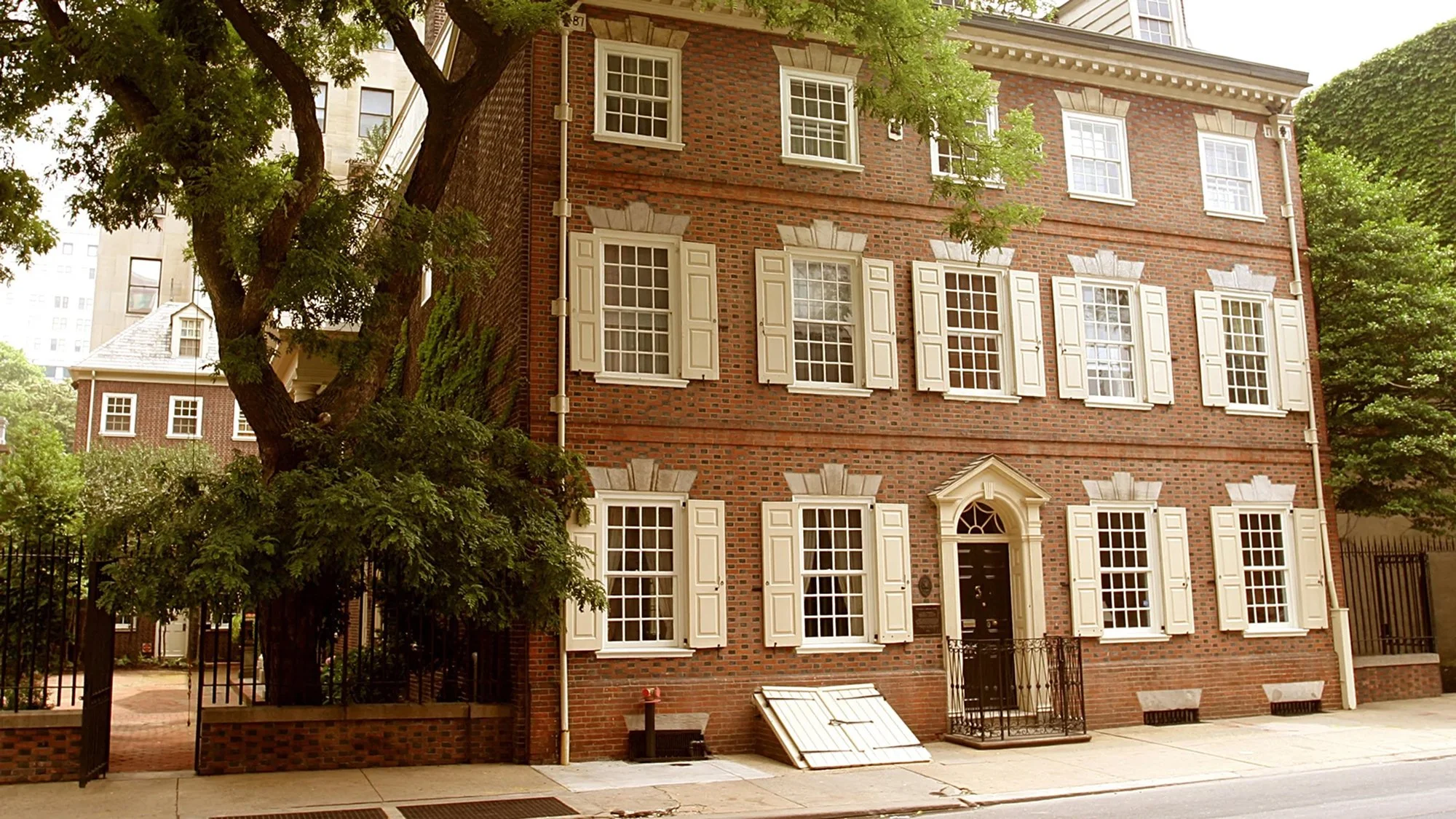
Morris House Hotel | Source: Morris House Hotel
Washington Square, Philadelphia
Built in 1787, the Morris House at 225 South 8th Street takes its name from the generations of the Morris family who occupied it for more than 120 years. Anthony Morris, who arrived in William Penn’s Philadelphia in 1685, was a preacher, brewmaster, and judge who became one of the city’s first mayors. His grandson Samuel founded the Gloucester Fox Hunting Club and served as captain of the Continental Army’s First Troop of Philadelphia City Cavalry. By 1790, when Philadelphia became the first capital of the United States, residents of the house could look out their windows and see Thomas Jefferson walking home along High Street, or George Washington passing in his cream-colored French coach.
Designated a National Historic Landmark in 1967, the building has been preserved close to its original Colonial design, making it one of the most intact historic brick residences left in the city. Rooms are comfortable and traditionally furnished, with complimentary grab-and-go breakfast and afternoon refreshments included. The Liberty Bell and Independence Hall are a short walk away, and for a history weekend in Philadelphia, it is hard to argue with sleeping inside a house that was already standing when the country was founded.