7 Ski Towns Worth Visiting Even If You Don’t Ski
Not a skier? These seven winter towns offer beautiful scenery, good food, design hotels, and plenty to enjoy off the slopes, no skiing required.
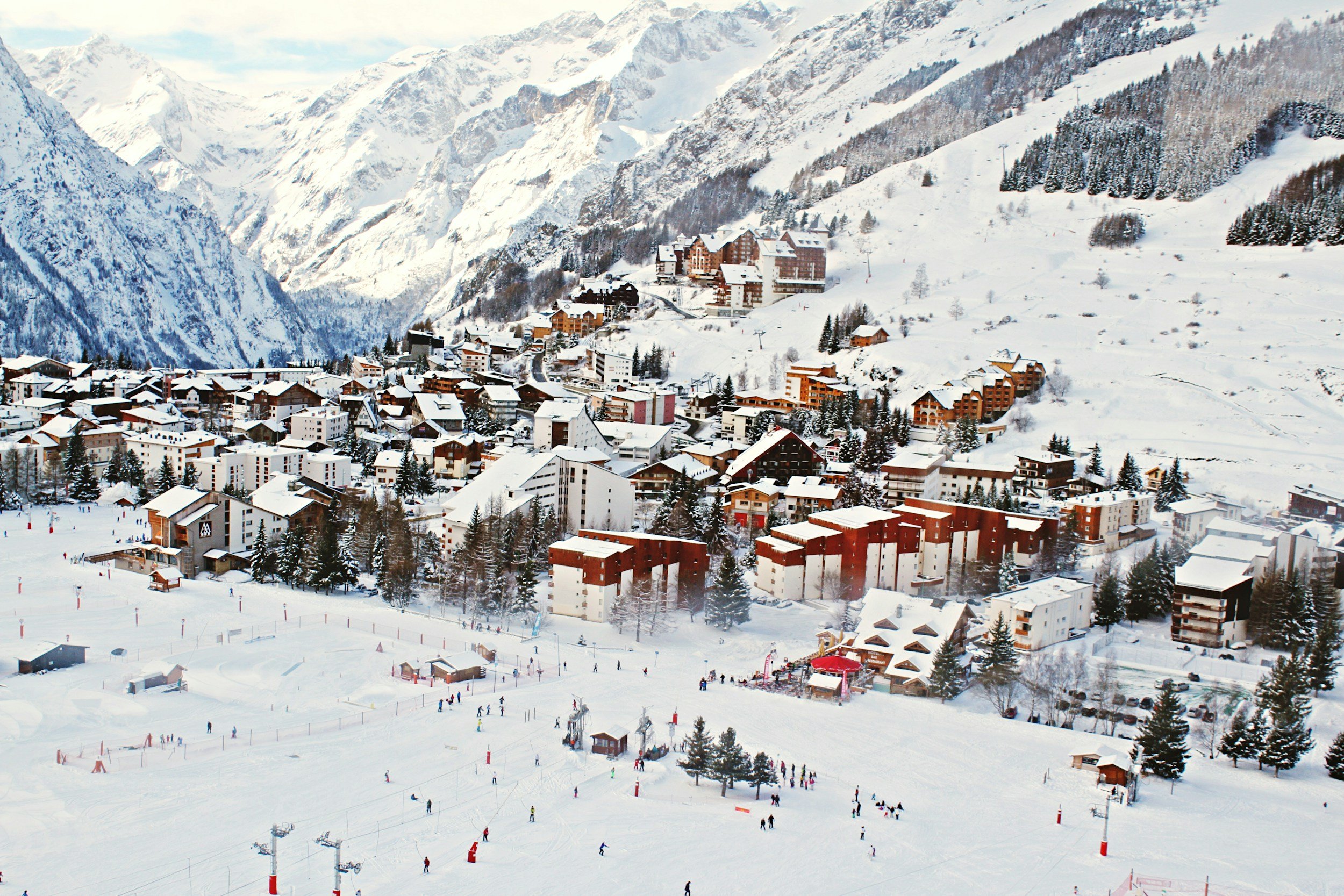
Source: Unsplash
Winter doesn’t have to mean lift tickets or perfect form on a slope. Some mountain towns are worth visiting for their atmosphere, food, and design, along with the slower pace that naturally comes with colder months. These seven destinations prove that a winter trip can feel full and satisfying even without skiing.
1. Aspen, Colorado

Photo: Josh Hild
Aspen began as a mining town and has grown into one of the country’s most developed winter destinations. The downtown area is compact and full of contemporary galleries, bookstores, design shops, and restaurants within a few walkable blocks. Institutions like the Aspen Art Museum give the town a strong cultural calendar, and South Mill Street has become a small hub for cafés and boutiques. Many visitors come specifically for the dining since Aspen supports everything from casual neighborhood spots to refined tasting menus. The town’s hotels also contribute to its reputation for high quality hospitality which makes Aspen appealing even for travelers who have no plans to ski.
What to do instead of skiing: visit galleries, enjoy a long lunch, browse shops, book a spa appointment, walk near the Roaring Fork River, relax during après without skiing.
2. Stowe, Vermont

Source: Pinterest
Stowe is one of the most recognizable winter towns in northern Vermont. The center of town is marked by the white steeple of the Stowe Community Church and a main street lined with general stores, cafés, outdoor outfitters, and independent shops. The area is known for maple farms, covered bridges, and inns that have welcomed travelers for decades. Stowe also provides easy access to nearby villages and scenic byways which makes it ideal for simple day trips and relaxed winter exploring. Local breweries and family-run restaurants add to its long-standing appeal.
What to do instead of skiing: stay at a historic inn, stop by a brewery, browse local shops, drive through Smugglers Notch, read by a fireplace, visit bookstores, go ice skating.
3. Park City, Utah

Source: Vrbo
Park City retains visible features from its mining past with a Main Street that rises uphill and features preserved wooden buildings on both sides. This corridor functions as the town’s central gathering point and contains galleries, restaurants, boutiques, and venues that host screenings during the Sundance Film Festival. Sundance brings global attention each January which reinforces Park City’s connection to film and culture. Outside the festival, the town remains active and easy to explore because so much is concentrated in one walkable area. The town lift begins on Main Street which allows travelers to take in mountain views without skiing.
What to do instead of skiing: see a Sundance screening in January, explore galleries, shop on Main Street, reserve a spa appointment, try a tasting menu, ride the town lift, walk nearby winter paths.
4. Telluride, Colorado

Source: Auberge Resorts
Telluride’s downtown is a compact historic district with a grid layout and Victorian buildings that date back to the mining era. Many structures have been carefully maintained which gives the town a clear architectural identity. Independent businesses, small restaurants, galleries, and coffee shops line the streets. A free public gondola connects the town to Mountain Village and operates throughout the day which allows visitors to experience both areas without using a car. Telluride hosts a number of festivals throughout the year and has a restaurant scene that is notable for a town of its size.
What to do instead of skiing: ride the gondola at sunset, explore the historic district, browse shops, book dinner reservations, walk winter trails, spend time in local cafés.
5. Jackson Hole, Wyoming

Source: Tripadvisor
Jackson Hole refers to both the town of Jackson and the wider valley that surrounds it. Jackson is known for its central square with antler archways, long-running local businesses, and restaurants that range from casual diners to modern mountain kitchens. The National Museum of Wildlife Art is one of the region’s key cultural institutions and sits a short drive from town. The valley itself is part of a significant wildlife corridor where visitors often book guided tours to see elk, bison, and other animals during the winter months. Teton Village operates as a separate but closely connected area with hotels, restaurants, and public gathering spaces.
What to do instead of skiing: take a wildlife tour, visit the museum, explore Teton Village, book a spa appointment, drive through the valley, enjoy a fireside drink at a lodge.
6. Banff, Alberta

Source: Pinterest
Banff is located inside Banff National Park and serves as the main service town for travelers visiting the region. The town’s main avenue is straightforward to navigate and contains shops, outfitters, restaurants, and park facilities. Well-known sites like Lake Louise and the Fairmont Banff Springs are easily accessible and do not require strenuous activity to experience. Trailheads, viewpoints, and visitor centers are clearly marked which makes Banff an uncomplicated destination for winter travel. A mix of historic hotels and modern lodges supports year-round tourism.
What to do instead of skiing: visit the hot springs, walk on frozen Lake Louise, stop at viewpoints, browse shops, have afternoon tea at the Fairmont, try snowshoeing, book a dinner with mountain views.
7. Taos, New Mexico

Photo: Mary Robnett
Taos offers a winter experience shaped by its adobe architecture, creative community, and layered cultural history. Taos Pueblo is a UNESCO World Heritage site and remains one of the most important cultural landmarks in the region. The town center includes galleries, small museums, and local craft shops that reflect Indigenous and Southwestern traditions. Visitors often explore the area specifically to learn about regional art and the long-standing artist community that has influenced Taos since the early 1900s. Short drives lead to high desert viewpoints that offer a perspective very different from traditional alpine destinations.
What to do instead of skiing: visit Taos Pueblo, explore galleries and studios, stay in an adobe casita, browse craft stores, try New Mexican dishes, take a scenic drive through the desert.