5 Must See Art Exhibitions in NYC This Winter
From Chelsea galleries to a major museum presentation uptown, these five exhibitions worth spending time with this winter.

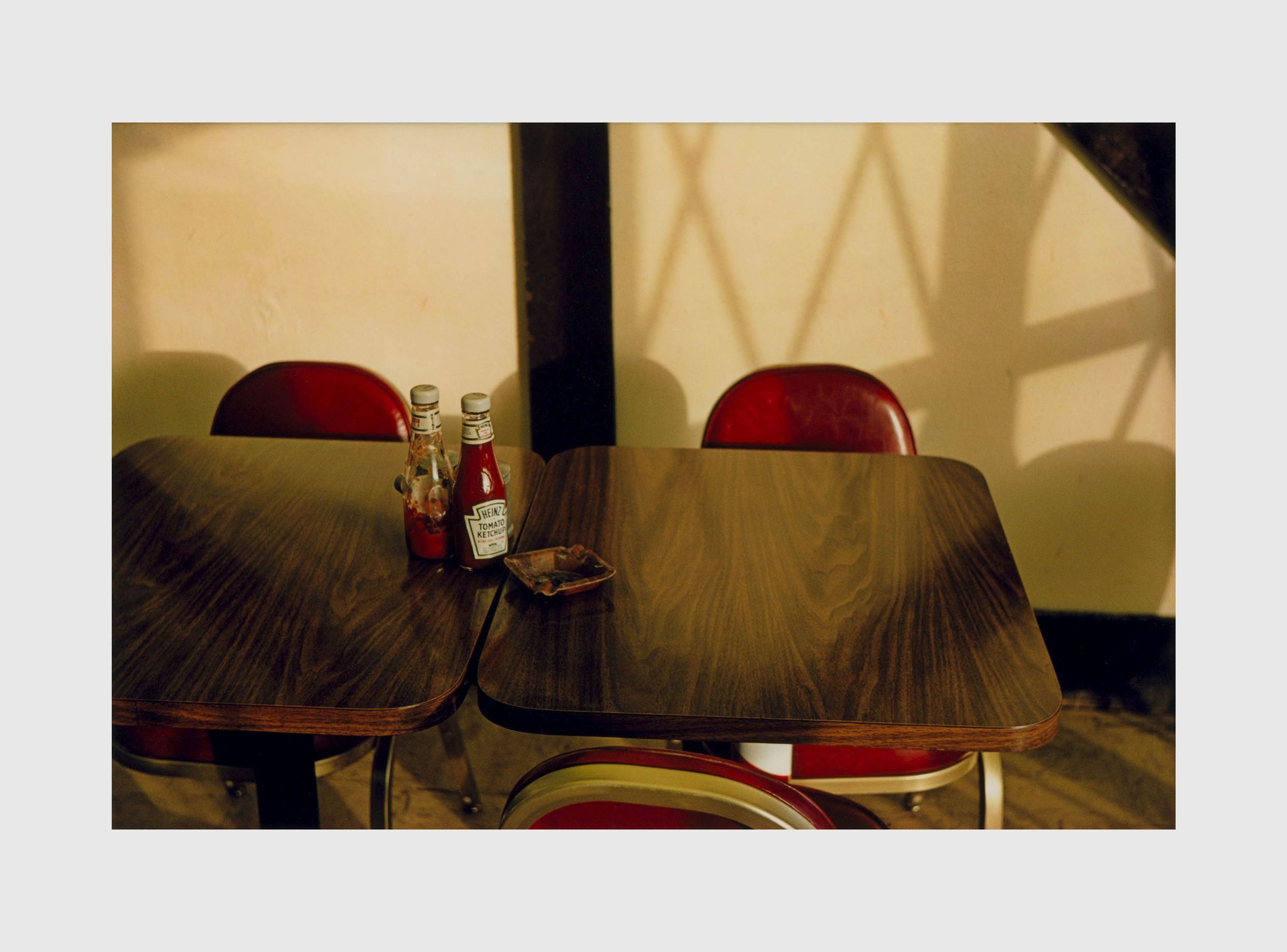
William Eggleston, Untitled, 1970 (detail). © Eggleston Artistic Trust | Source: David Zwirner
New York City has no shortage of exhibitions in winter, and this season offers plenty of reasons to get out and see what’s on view. From Chelsea galleries to a major museum presentation uptown, artists are being revisited and reconsidered across photography, painting, and sculpture. Whether you’re gallery-hopping or planning a single destination visit, these five exhibitions stand out right now.
1. William Eggleston: The Last Dyes



Where: David Zwirner | 533 West 19th Street, New York
When: January 15 – March 7, 2026
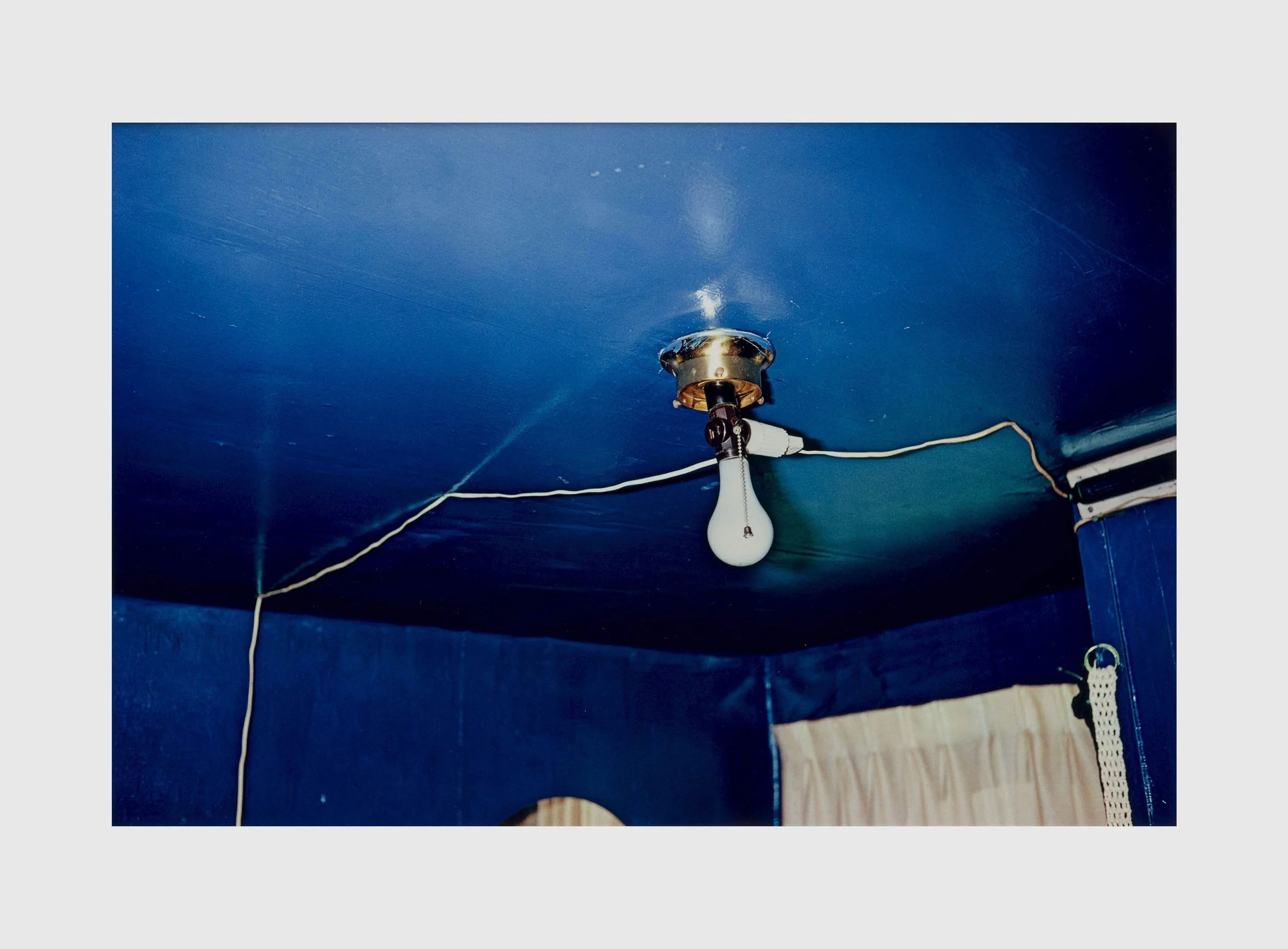
The Last Dyes brings together the final dye-transfer prints ever made by William Eggleston, marking the end of a printing process that became central to his work in the 1970s. Selected by Eggleston in consultation with his sons, the photographs span images from his Outlands and Chromes series, alongside works first shown in his 1976 exhibition at The Museum of Modern Art.
The presentation returns to the years he spent traveling through the American South, where everyday scenes became sites for sustained attention to color, light, and composition. Across landscapes, interiors, and portraits, the dye-transfer process heightens tonal range and depth, giving familiar images a lasting presence that still feels immediate.
About the Artist: William Eggleston was born in Memphis in 1939, where he continues to live and work. His photographs were instrumental in establishing color photography as a serious artistic medium, reshaping how everyday subjects could be seen and understood. Over the past five decades, his work has been exhibited widely at major institutions, including the Whitney Museum of American Art and The Metropolitan Museum of Art, and is held in museum collections around the world.
2. Bill Bollinger: I Am Gravity



Where: Karma | 188 East 2nd Street, New York
When: January 9 – February 14, 2026
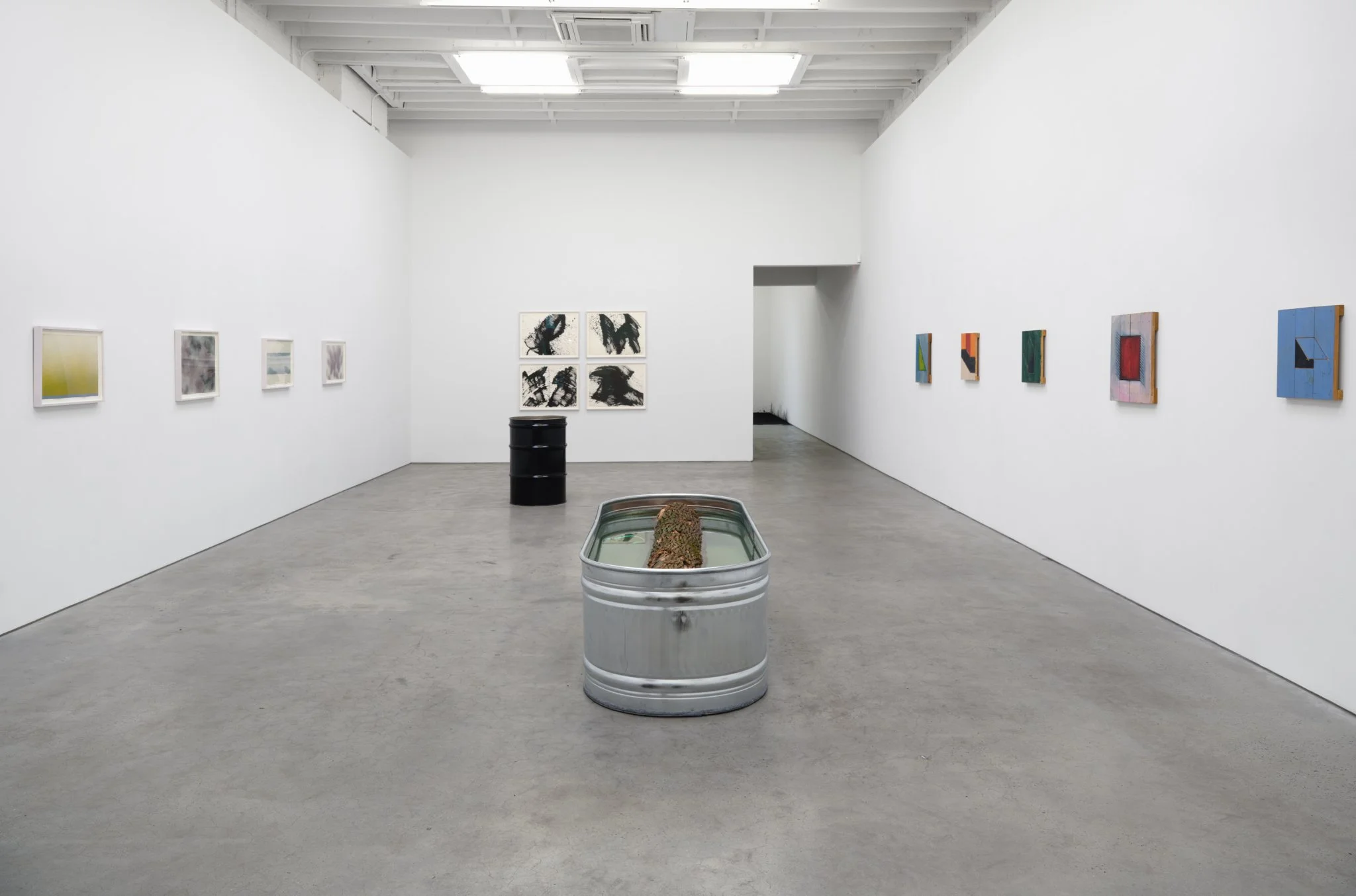
I Am Gravity is Karma’s first exhibition with the estate of Bill Bollinger, bringing together sculptures, installations, drawings, and paintings that reflect his direct engagement with physical forces. Using materials such as rope, aluminum pipe, graphite, and wood, Bollinger allowed gravity, tension, and balance to determine form rather than imposing meaning from the outset.
The exhibition revisits works first conceived in the late 1960s and early 1970s, including a reconstruction of a graphite scatter piece and a new iteration of Trough with Floating Log. Later paintings on wood appear alongside these earlier works, grounding complex engineering principles in objects that remain resolutely straightforward and physical.
About the Artist: Bill Bollinger was born in Brooklyn in 1939 and studied aeronautical engineering before turning to art. He became a key figure in Postminimalist and anti-form practices, participating in influential exhibitions such as When Attitudes Become Form in 1969 alongside artists including Richard Serra and Eva Hesse. Bollinger’s work often existed temporarily, emphasizing material behavior and natural forces over permanence. Though his career was brief, his approach continues to influence artists working with systems, materials, and spatial logic.
3. Wang Guangle: Delayed Gravity

Where: Pace Gallery | 540 West 25th Street, New York
When: January 16 – February 28, 2026
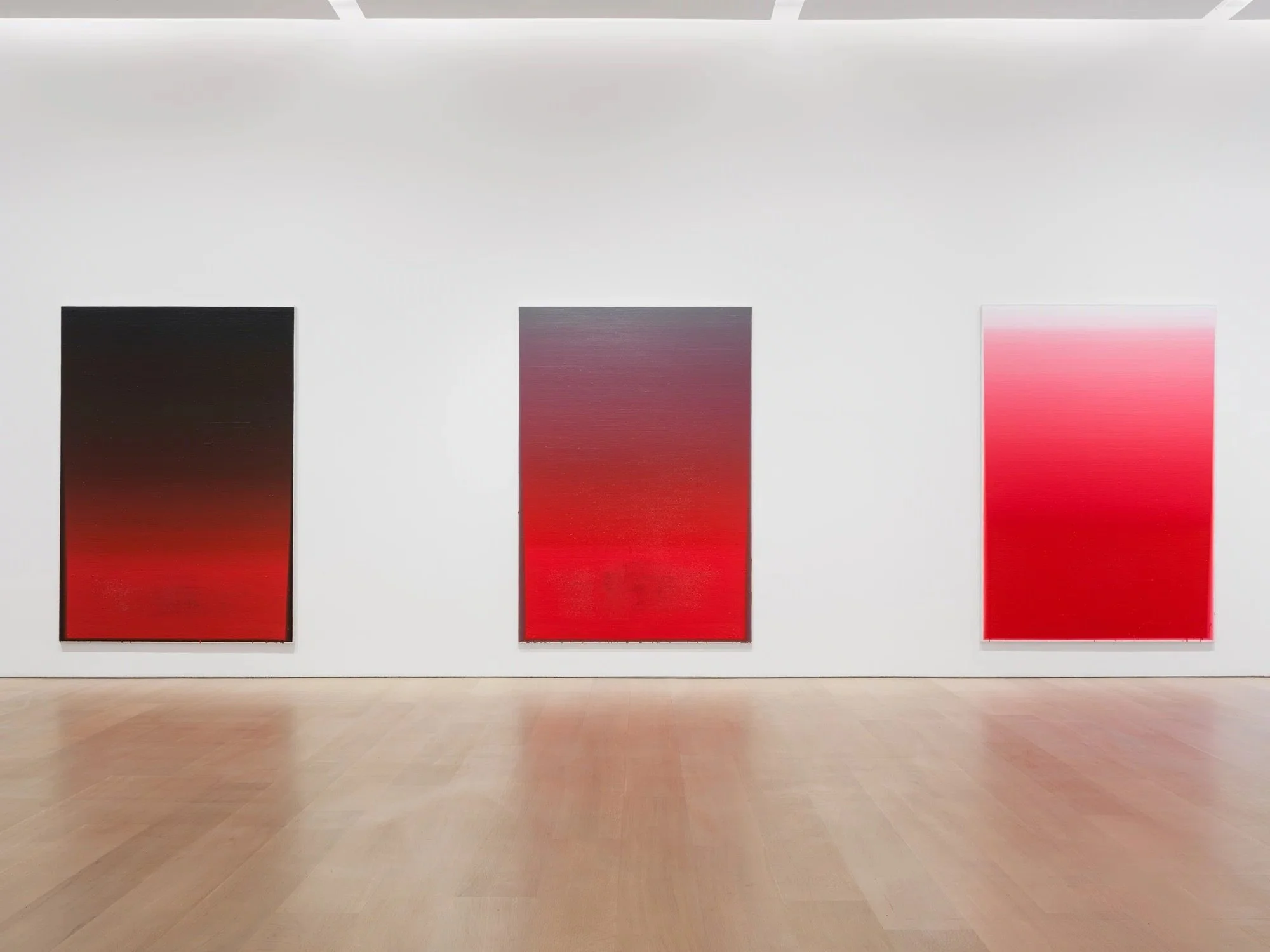
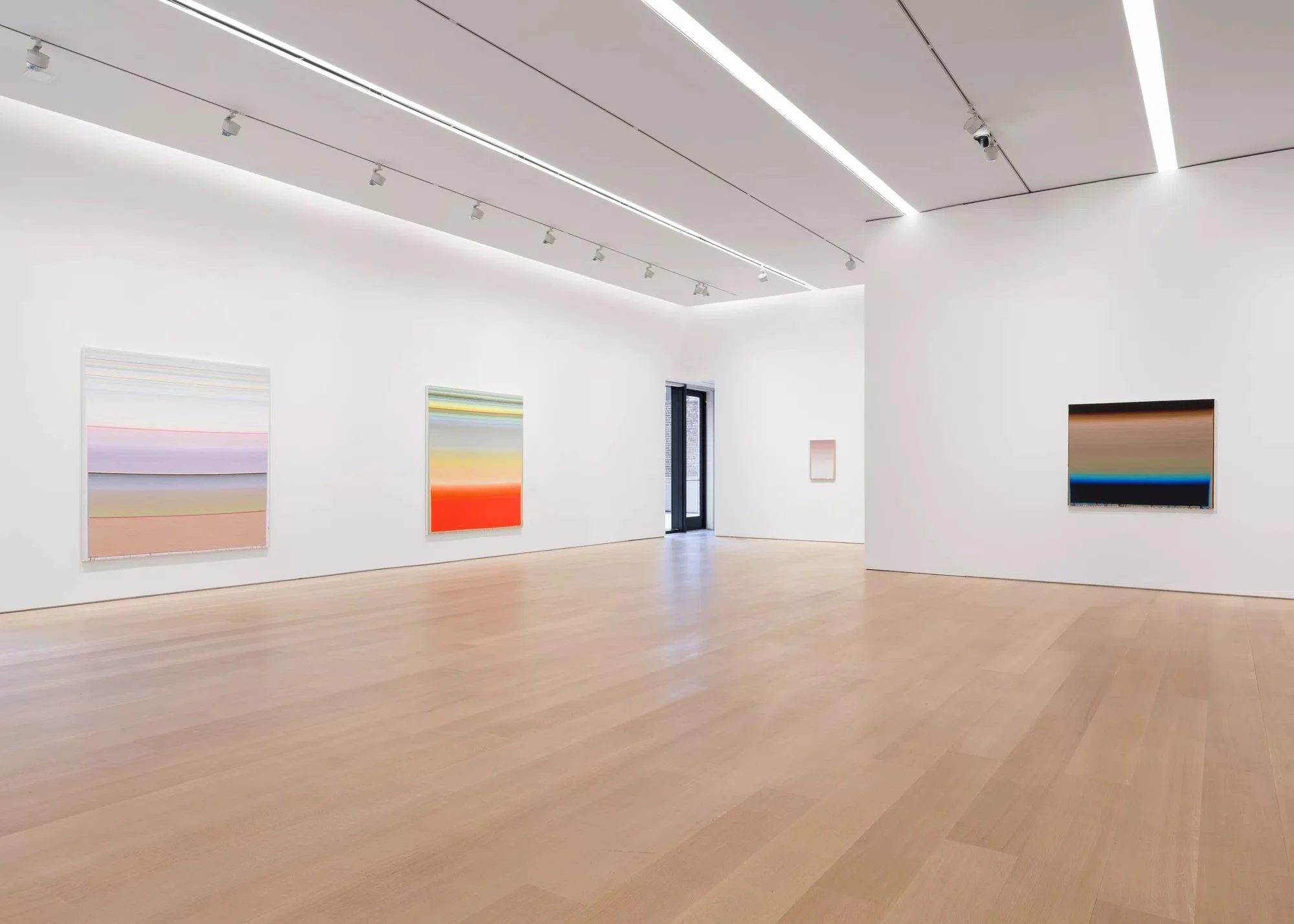
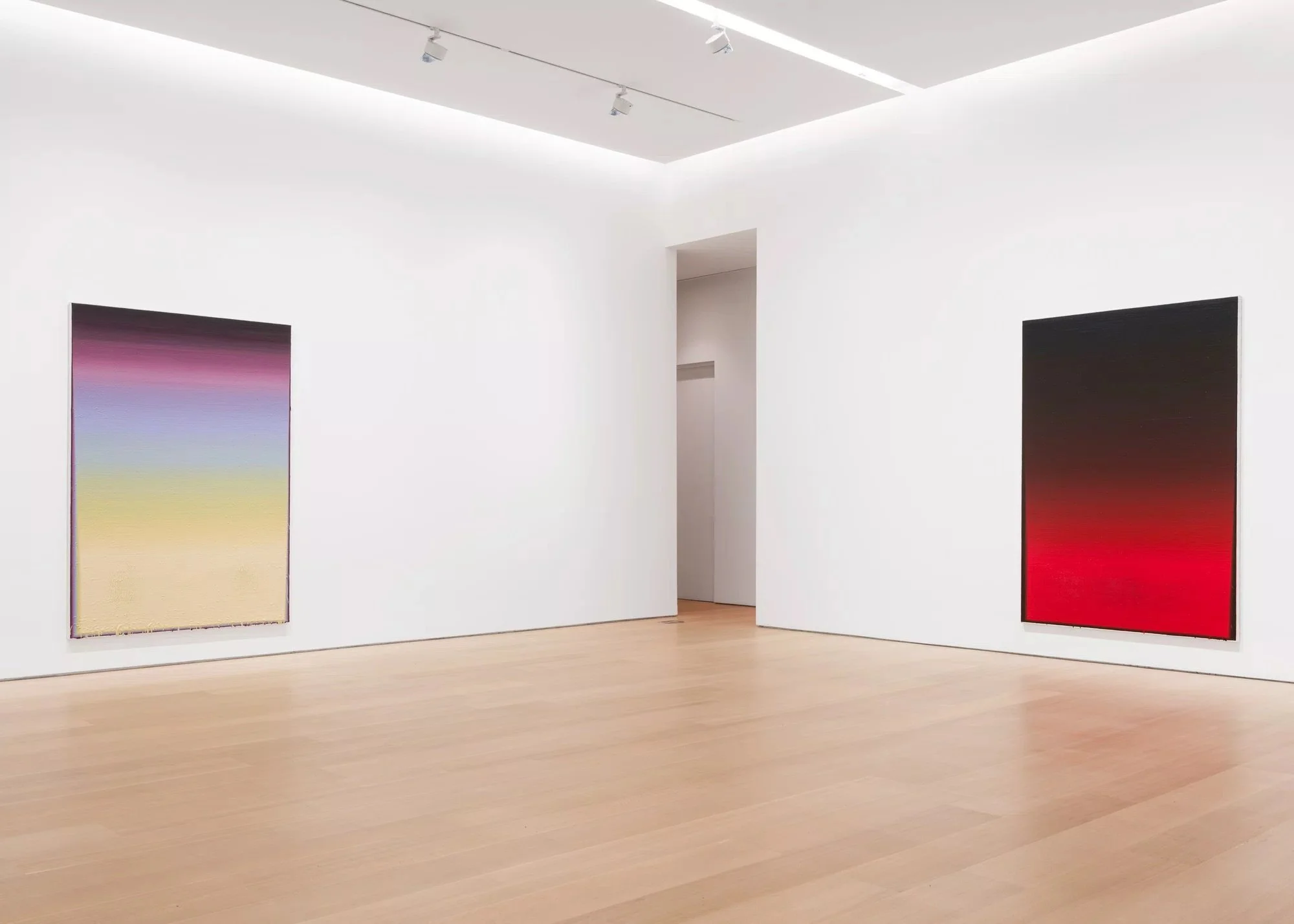
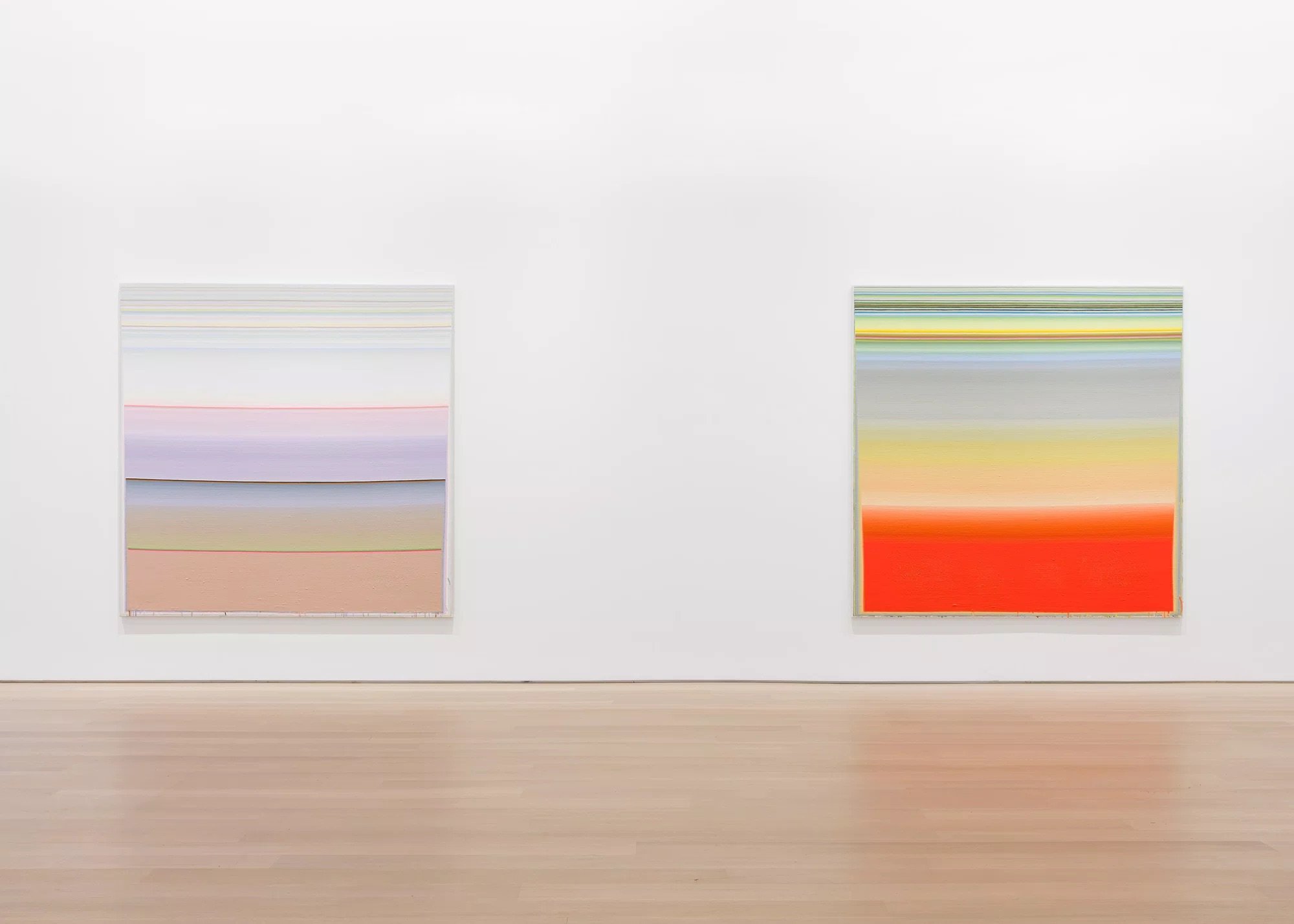
Delayed Gravity brings together ten new large-scale paintings by Wang Guangle, marking his first New York solo exhibition since 2019. Built slowly through layered applications of acrylic paint, the works unfold through repetition and duration rather than gesture. This new body of work continues Wang’s long-running Untitled series, while introducing a shift in method. Instead of painting on canvases laid flat, these compositions were produced vertically, allowing gravity to play a more visible role in the downward movement of pigment. Bands of color appear to fade, recede, and press forward at once, giving the paintings a physical presence that feels almost architectural.
The exhibition also includes a new participatory installation on the gallery’s outdoor terrace, where layers of pigment freeze overnight into stacked slabs of ice, extending Wang’s interest in time, process, and impermanence beyond the canvas.
About the Artist: Wang Guangle was born in Fujian, China, in 1976 and is widely regarded as a key figure in the development of conceptual abstraction in contemporary Chinese painting. His practice centers on repetition as a way of registering time, persistence, and physical experience, often unfolding over weeks or months. Wang has described his work as an act of continuation, where painting becomes a sustained engagement rather than a finished statement. His work has been exhibited internationally, with recent solo presentations in Seoul, London, Beijing, and Shanghai.
4. Sol LeWitt: Works from the 1960s


Where: Paula Cooper Gallery | 534 West 21st Street, New York
When: January 15 – February 28, 2026
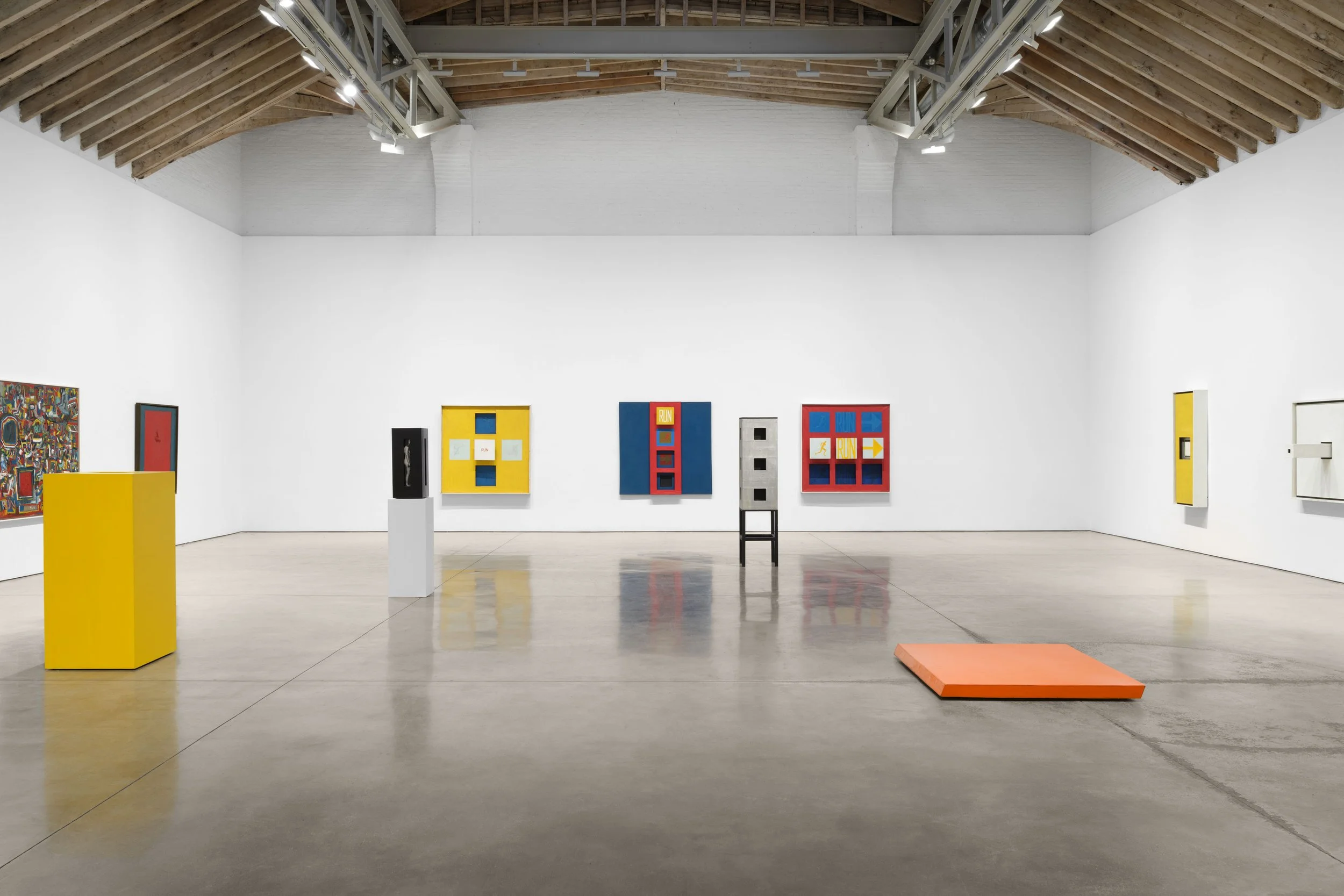
Works from the 1960s examines a pivotal period in Sol LeWitt’s practice, tracing his shift from figurative painting toward serial structures and rule-based systems. The exhibition brings together early paintings, reliefs, drawings, and sculptures that reflect his growing interest in sequence, repetition, and three-dimensional form. Several works draw from Eadweard Muybridge’s sequential photographs, showing figures in motion and revealing how LeWitt used repetition as a way to think through image-making. Key works include Modular Cube from 1966, first shown in Primary Structures, alongside early wall drawings that signal the direction his work would soon take.
About the Artist: Sol LeWitt was born in Hartford, Connecticut, in 1928 and became a foundational figure in Conceptual art. Working across drawing, sculpture, and wall-based works, he centered ideas and systems as the basis of artistic production. His approach challenged traditional notions of authorship and execution, and his influence continues to shape contemporary art practice.
5. Seeing Silence: The Paintings of Helene Schjerfbeck

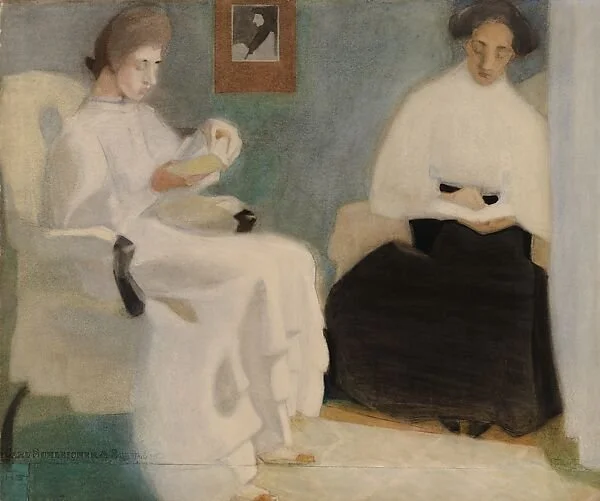

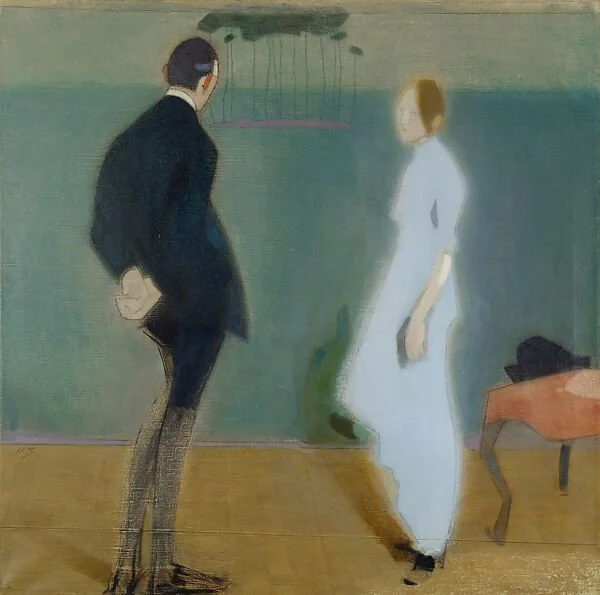
Where: The Metropolitan Museum of Art | 1000 Fifth Avenue, New York
When: Through April 5, 2026
Seeing Silence: The Paintings of Helene Schjerfbeck offers the first major presentation of Helene Schjerfbeck’s work at a United States museum, bringing together nearly sixty paintings drawn from Finnish and Swedish collections. The exhibition traces her artistic evolution from early academic training in Paris to the pared-down portraits and self-portraits that defined her later years.
Over time, Schjerfbeck stripped away detail and color, arriving at a restrained visual language that feels both intimate and unsentimental. Faces appear softened, then reduced further, carrying psychological presence without narrative. Seen together, the works reveal a steady progression toward simplicity that feels deliberate rather than austere.
About the Artist: Helene Schjerfbeck was born in Helsinki in 1862 and spent much of her career working in relative isolation. Though celebrated in Nordic countries, her work remained largely unfamiliar to international audiences during her lifetime. Schjerfbeck’s paintings bridge realism and modernism, marked by reduction, repetition, and sustained attention to the human face. She continued working into her final years in Sweden, leaving behind a body of work that stands as an essential contribution to modern painting.